


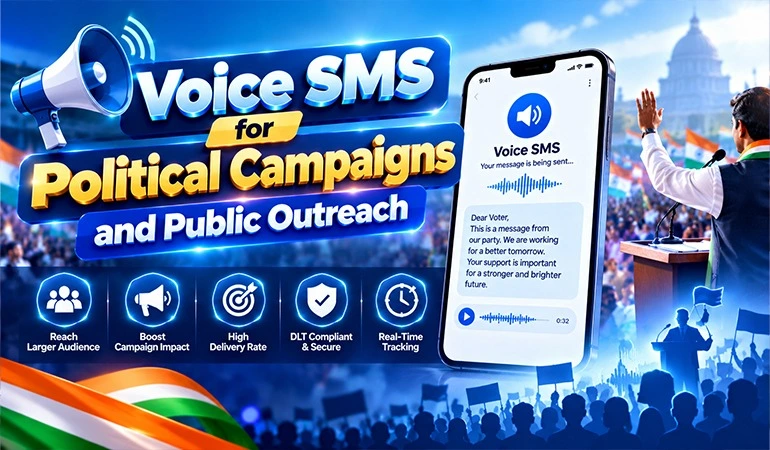
Reaching people across different communities is an important part of political campaigns and public communication. Political organisations, election teams, public representatives and civic bodies often need to share announcements, event details, voting information and public updates with large groups of people.
However, reaching everyone through individual phone calls can take considerable time and effort. Written messages may also go unnoticed by people who do not regularly check their phones for notifications.
Voice SMS offers another way to share information. It allows organisations to deliver pre-recorded voice messages through automated calls, making it easier to communicate announcements with a large audience.
What Is Voice SMS?
Voice SMS is an automated voice communication service that delivers a recorded message to selected phone numbers. Instead of receiving a written SMS, the recipient receives a call and listens to the recorded announcement.
The sender prepares the recording, selects the contact list and schedules the campaign through a suitable service provider.
For example, an organisation can record an announcement about a public meeting and share it with registered participants. Similarly, a civic body can use recorded calls to communicate information about a public awareness programme.
Voice SMS helps organisations share consistent spoken information without requiring staff members to make every call individually.
Why Is Voice SMS Useful for Political Campaigns?
Political campaigns involve several communication activities. Teams may need to announce public meetings, share event schedules, provide election-related information and communicate updates to volunteers and registered supporters.
Voice SMS can help manage these activities through recorded calls.
1. Reaches People Through Phone Calls
Some people are more comfortable listening to a phone call than reading a lengthy written message. This may include senior citizens, people with limited digital access and individuals who prefer spoken information.
Voice SMS gives organisations a way to communicate with these audiences through a familiar calling format.
2. Shares Announcements With Large Groups
Campaign teams may need to inform many people about the same event or announcement. Calling each person separately can increase the workload.
With Voice SMS, a single approved recording can be delivered to a selected contact list. This can save time during public meetings, awareness drives and scheduled announcements.
3. Supports Regional Language Communication
Language is important when communicating with people from different communities. A message delivered in a familiar language can be easier to understand.
Organisations can prepare recordings in Hindi, English or relevant regional languages. Separate recordings can be used for different language groups where appropriate.
4. Helps Keep Information Consistent
When different team members make individual calls, the information may vary slightly. A recorded announcement helps maintain the same wording and details for every recipient.
This is useful when communicating:
- Public meeting dates and locations
- Event registration details
- Volunteer instructions
- Changes in programme schedules
- General voter awareness information
5. Reduces Routine Calling Work
Campaign teams often manage several activities at the same time. Repeatedly calling people to share basic announcements can take employees and volunteers away from other responsibilities.
Voice SMS can handle routine recorded announcements, allowing team members to focus on event coordination, public enquiries and on-ground activities.
6. Helps Communicate Time-Sensitive Updates
Changes in event timings, meeting locations or public programme schedules need to be communicated promptly.
A Voice SMS campaign can help share such updates with the relevant contact group. Organisations should maintain updated contact lists and schedule messages carefully to avoid confusion.
Uses of Voice SMS in Political Campaigns and Public Outreach
Public Meeting and Event Announcements
Political organisations and public representatives may organise meetings, community discussions, press events and public programmes.
Voice SMS can be used to announce the date, time, venue and other relevant details. Recipients can listen to the information directly instead of searching through written notifications.
Voter Awareness Programmes
Voter awareness activities help people understand election-related procedures and important dates.
Recorded messages can communicate neutral information about voter registration assistance, polling dates, identification requirements and official information sources. All details should be checked against current Election Commission guidance before distribution.
Volunteer Coordination
Campaigns and public programmes often depend on volunteers who help manage events and local activities.
Voice SMS can share general instructions about reporting times, meeting points, training sessions and schedule changes with registered volunteers.
Public Service Announcements
Public representatives and civic organisations may need to communicate information about sanitation drives, health camps, local meetings, public facilities or community programmes.
Voice SMS can help distribute these announcements to relevant residents, provided the contact data is collected and used appropriately.
Community Outreach
Organisations can use recorded calls to invite residents to public consultations, community discussions and awareness sessions.
A short announcement can explain the purpose of the programme and provide the necessary details for participation.
How to Create an Effective Voice SMS Campaign
A good campaign begins with a clear message and a well-maintained contact list. Organisations should plan the communication before sending recorded calls.
1. Define the Communication Objective
Decide what the announcement needs to achieve. It may be intended to inform people about a public event, share an important update or provide details about an awareness programme.
Avoid combining several unrelated announcements in one recording.
2. Prepare a Clear Voice Script
Write the message in simple language. The listener should understand who is calling and why the information is being shared.
A useful script should include:
- The name of the organisation.
- The purpose of the call.
- Important dates, timings and locations.
- An official contact channel, where required.
3. Select the Appropriate Language
Prepare recordings in languages understood by the intended audience. Use natural sentences and clear pronunciation.
If a campaign covers multiple language groups, have each recording reviewed by a fluent speaker before sending it.
4. Organise the Contact List
Use properly sourced and updated contact information. Keep records of permissions and communication preferences wherever required.
Do not use leaked, purchased or unauthorised phone number databases. Respect requests from people who do not wish to receive further calls.
5. Schedule Calls Responsibly
Choose a suitable time for the announcement. Avoid unnecessary calls, repeated reminders and inconvenient calling hours.
For urgent public information, make sure the message is accurate and reaches only the relevant audience.
6. Review Campaign Reports
Check the reports available through the Voice SMS service provider. Depending on the service, reports may show attempted calls, answered calls and unsuccessful delivery attempts.
These details can help teams understand campaign reach and improve future communication.
Use Cases of Voice SMS in Political Campaigns and Public Outreach
Use Case 1: Announcing a Public Meeting
A political organisation is planning a public meeting to discuss local infrastructure, sanitation and community facilities. The organisers need to inform registered participants about the event.
The team prepares a short Voice SMS recording containing:
- The organisation's name.
- The purpose of the meeting.
- The date and venue.
- The scheduled starting time.
- An official contact number for further information.
The recording is sent to the relevant contact list. Participants can listen to the announcement and note the event details.
This approach helps organisers share consistent information without making individual calls to every registered participant.
Use Case 2: Sharing Voter Awareness Information
A civic organisation is conducting a voter awareness programme before an election. It wants to inform residents about the importance of checking their registration details and referring to official election information.
The organisation prepares a neutral voice announcement in the relevant local languages. The recording directs listeners to official Election Commission resources for verified information about registration and polling procedures.
Voice SMS helps distribute the announcement to the intended audience while keeping the information consistent across different groups.
Case Studies: Practical Applications of Voice SMS
The following case studies are illustrative examples. They describe possible applications and are not verified client results.
Case Study 1: A Political Organisation Managing Public Event Announcements
The Challenge
A political organisation regularly arranged public meetings and community programmes. Its team had to inform registered participants about event schedules, venue changes and meeting timings.
Making individual calls required considerable time, especially when details changed at short notice.
The Solution
The organisation introduced Voice SMS for routine event announcements. It prepared short recordings with the programme details and sent them to the relevant contact groups.
Separate recordings were prepared when announcements needed to be shared in different languages.
The Expected Outcome
The team could distribute consistent event information through automated calls. Participants had a convenient way to listen to the announcement, while organisers could spend more time managing event arrangements and responding to individual enquiries.
Case Study 2: A Civic Organisation Conducting a Public Awareness Drive
The Challenge
A civic organisation planned a public awareness programme covering sanitation, health services and community participation. It needed to inform residents across several local areas.
Its existing communication methods did not reach every intended participant equally.
The Solution
The organisation used Voice SMS to share short public announcements with relevant contact groups. The recordings explained the purpose of each programme, its schedule and where residents could find additional information.
The team used simple language and reviewed the details before sending the calls.
The Expected Outcome
Voice SMS provided another communication channel for reaching residents. The organisation could share the same approved information with different groups and reduce the amount of manual calling required.
Important Guidelines for Using Voice SMS in Political Communication
Political and election-related communication requires care. Organisations should ensure that recorded announcements are accurate, transparent and compliant with applicable laws and election instructions.
In India, the Election Commission has issued directions concerning bulk SMS and recorded voice messages used in political campaigning, including requirements relating to pre-certification of political advertisements. Organisations should check the current rules and obtain the necessary approvals before running election-related campaigns.
They should also review applicable telecom requirements. TRAI provides guidance on sender registration, consent, customer preferences and rules governing commercial communication. The exact requirements depend on the type and purpose of the communication.
Follow these practices:
- Identify the organisation clearly at the beginning of the recording.
- Share verified information from reliable sources.
- Avoid misleading statements, unverified claims and inflammatory content.
- Respect privacy and use contact details only for authorised purposes.
- Follow applicable consent, calling and preference requirements.
- Obtain required election-related approvals before distributing political advertisements.
- Provide a suitable contact route for questions or corrections.
- Avoid excessive calls and respect recipients' communication preferences.
How Voice SMS Supports Better Public Outreach
Public outreach depends on clear communication and timely information. People need to know where an event is taking place, when a programme is scheduled and where they can find reliable details.
Voice SMS gives organisations another way to share this information through recorded calls. It can be useful for event announcements, volunteer coordination, voter awareness and civic programmes.
Voice SMS can support these activities by helping teams distribute prepared messages to relevant contact groups. When combined with accurate information, responsible scheduling and proper contact management, it can become a practical communication tool for political organisations and public outreach teams.
FAQs
Voice SMS is an automated service that delivers recorded announcements through phone calls. Political organisations can use it to share public meeting details, event schedules, volunteer updates and general awareness information with relevant contact groups.
Yes. It can share neutral information about voter registration assistance, election dates and official information sources. All election-related details should be verified before distribution.
Yes. Organisations can prepare separate voice recordings in Hindi and other regional languages. This helps people receive announcements in a language they understand comfortably.
Yes. Public representatives and their offices can use it to announce community meetings, public service programmes, health camps and other local activities.
Yes. They should follow applicable telecom rules, privacy requirements and Election Commission directions. Political advertisements may require pre-certification, so organisations should verify current requirements before sending campaigns.